Portfolio

Calvin Ristad

Application Developer and Software Engineer

I build dashboarding, workflow automation, AI extraction, data visualization, and browser game systems across software, manufacturing, and public-interest products.

Portrait of Calvin Ristad

Experience

Work and Research

Johnson & Johnson logo

Johnson & Johnson

Software Engineering Contractor - Application Development

Developing a web interface for the MARCH centralized model archival and retrieval system, including role-based access control, version-controlled model storage, and model exploration tools.

Building a Dockerized Python web app that retrieves manufacturing data from Databricks and automatically generates editable model maintenance reports with charts, statistical analyses, and narrative summaries.

Built a guardrailed GenAI agent to extract structured data from handwritten paper batch records with 1/20th the error of Copilot alone, plus a companion review app that sped up human review versus manual extraction.

Extended the internal application framework built during my Co-Op with interactive documentation, Jenkins CI/CD integration, Databricks/Teradata connections, FastAPI support, and HTMX interactivity.

Built and deployed tools for device design-space search, filter adsorption modeling, MSAT pathmapping, and intensified perfusion process monitoring.

Johnson & Johnson logo

Johnson & Johnson

Process Science Modeling and Data Co-Op

Sped up app development in my team by creating a new Python application framework and J&J brand-compliant UI component library using Jinja and Flask.

Centralized all site-to-site tech transfer data within J&J into a single application, allowing users to view technologies used and connect with relevant in-house experts.

Implemented a mechanistic cell growth model using FilterPy unscented Kalman filters that outperformed linear regression, XGBoost, CART, and SVM for prediction accuracy on trial data.

Led the 28-person intern community within my group; organized guest speakers to share career insights.

University of Illinois Chicago logo

Mixed Reality Laboratory

Research Intern

During the summer of 2020, I joined the Mixed Reality Laboratory at the University of Illinois Chicago, an organization focused on applying virtual and augmented reality to medicine.

I worked on CathSym, a virtual-reality catheterization trainer designed to improve 3D visualization and haptic feedback.

I built solutions in Unity, learned C#, and worked closely with medical professionals and design researchers to improve the interface.

My largest contribution was redesigning the catheter simulation visuals, which reduced resource usage in Unity Profiler by more than 40%.

Projects

Selected Builds

Vertex Builder

Vertex Builder

I developed Vertex Builder, an x402 powered agentic marketplace that allows both humans and AI to purchase data and services using the x402 payment protocol.

OurFreePantry project cover image

OurFreePantry.org

Created a free app to help people find free food near them tailored to their cultural and dietary needs.

Uses a visual language model to infer pantry inventories from uploaded pictures and Firebase to maintain those inventories.

Macros.cheap web application interface

Macros.cheap

I developed Macros.cheap, a Mathematical Macronutrient Cost Optimizer that helps users optimize their nutrition while minimizing grocery costs.

Built the optimizer with GLPK and WASM so users can turn nutrition targets and grocery prices into budget-aware meal plans.

The core philosophy is simple: Eat well, spend less!

VarietySplash production data visualization

Data Visualization

Built a scalable, high-performance web crawler and GUI for VarietySplash productions using Electron.js.

Created additional visualization apps for Wawa service maps, Rutgers bus arrivals, restaurant wait times, and a FrameNet explorer.

.IO Style Web Games

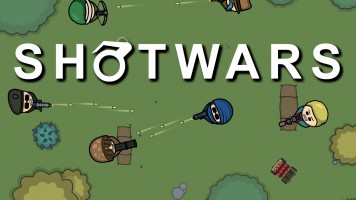
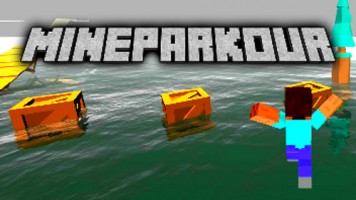
I created, developed, and launched 14 multiplayer browser games, including Shotwars.io, Glork.io, and MineParkour.club, accumulating more than 6 million total plays.

The stack combined HTML5, CSS, JavaScript, and Node.js with a custom game engine built on p2 physics, the Canvas API, and WebSockets for multiplayer support.

The 3D titles used Three.js together with a custom physics engine built for capsule movement on convex surfaces.

Distribution partnerships with AddictingGames.com, Iogames.space, CrazyGames, GameDistribution, and Titotu helped drive the games to public audiences.

Insanegames.io webgame portal

Insanegames.io

Designed and implemented a web game portal with a streamlined submission and review pipeline.

Managed cloud hosting, database, Google Analytics, API maintenance, proxies, anti-spam / anti-bot measures, and developer login/chat/storage APIs.

At the time of sale, the portal had more than 100,000 views per week.

CASSIS logo

Sports Analytics

Built a linear programming based system to optimize high school swimming lineups.

Presented work at the Cascadia Symposium on Statistics in Sports (2024).

Developed a Bayesian approach to ranking elite youth triathletes that greatly outperformed the USAT points system.

BlimpServe application interface

BlimpServe

I co-designed a proprietary medicine-transport airship drone to address supply chain issues in underserved and hard-to-reach locations.

BlimpServe avoids the infrastructure requirements of roads and airports while using lightweight solar panels to extend range and improve efficiency.

The system also tackled cold-chain transport by using low ambient temperatures at altitude together with abundant solar energy.

A 10-DOF flight controller and vectored thrust propeller controlled the craft, while the flight-path planner used NOAA wind-current data, A* search, and gradient-descent path smoothing.

Rocket.js simulator visualization

Rocket.js

I built a high-performance rocket flight simulator for multi-stage, clustered, and air-launched model rockets using thrust data from thrustcurve.org.

The simulator uses the Euler-Cromer method and a configurable time step so users can trade accuracy for performance.

It was initially developed to support the design of a balloon-launched rocket that was successfully launched in 2020.

Validation against real-world flights showed an average error of less than 5%.

Scout Infinity concept diagram

Scout Infinity

I co-designed an augmented smartphone case using Internet of Things technology to improve the mobile experience and democratize long-range communication.

The Infinity case connects phones to the LoRaWAN low-power wide-area network over Bluetooth Low Energy.

Lost devices can be geolocated by combining the phone’s last GPS data with the case’s own LPWAN triangulation and six-degree-of-freedom sensor data.

Ultra-low-power components and passive NFC charging help the device operate without adding daily charging friction.

Game Demo

Shotwars.io

Play a live build of Shotwars.io directly from the portfolio site.

If the live embed does not load, open Shotwars.io.